Sunday, July 10, 2016

National Weight Control Registry 2016 Annual Survey

This is what the disease of Chronic Obesity Looks like link

Today I was asked by NWCR to fill out my annual survey.

The big change in the last year is that I went on Qsymia. 

It has made a major difference without needing to change my ad libitum diet or my 20 minute one mile walk a day.  I also drink alcohol.

Below is a summary of how I maintained weight loss since 2006.


I was 280 pounds when I made this contract with myself:

I lost 80 pounds by 11-06(nine months of diet)
 and maintained that weight till 12-07 (13 months of same diet)
I maintained 80 pound weight loss for 22 months.

(No one told me that nothing gets rid of the billions of shrunken fat cells I had accumulated)

As the slides states, I was able to lose 80 pounds in the first nine months.

I maintained the low plateau weight of 205 to 210 lbs for the next 13 months staying on 1500 calories a day and exercising 2 hours a day.  

This is as good as most bariatric surgery results. 

I gave up on the 1500 calorie diet and concentrated on exercise in
Jan 2008.
 I slowly gained 50 lbs back.
I did not get all the way back up to 280 lbs as I switched to Atkins in Jan 2011.  

By 12-17-09 I was back up to 250 pounds
I maintained a 32 pound weight loss from 2-06 till 1-11.
This still made me a success in the eyes of NWCR.
That is almost 5 years. I have not counted calories since Jan 2008
Remember, 30% of all bariatric surgery patients gain all their weight back


I did not want to continue to gain weight as I knew I would have to back on Insulin.  The high level of exercise was not making a difference for weight loss. ( I later heard the phrase "You can't outrun your fork" from Yoni Freedhof. )

I could not bare the thought of a 1500 calorie diet again.

Then I read Gary Taubes book Why We Get Fat in Jan 2011.
I went on Atkins and I stopped gaining weight.
I probably was not in nutritional ketosis because I ate so much protein.

I did not lose weight but I had cut back on my exercise to 20-40 minutes walking a day.  I ate ad libitum Atkins so I was never hungry.

I maintained the 248 pound weight with the Atkins and 20 min. walk until   

3-3-14 Went off Insulin and started Invokana  weight 262 pounds

6-24-15 Started Qsymia  weight 244 pounds

11-7-15 Tapered off Actos and restarted Victoza 225 pounds

Dr. Louis J Aronne, Chairman of ABOM  has taught me the use of diet medications.  He has taught that several medications may be needed as the body tries to compensate the effects of a single medicine.  This is why drugs are now given in combination for life long treatment of the Chronic Disease of Obesity

7-1-16 No change in ad libitum Atkins and 20 min/mile/walk/d 220 lbs
The only change is I eat less on the 6 diet medications
1-Metformin
2-Invokana 
3-Victoza
4/5- Qsymia (phentermine/topiramate)
6- Caffeine in coffee during day as needed.

(I have increased exercise since 6-20-16 when I started water aerobics and started light weight circuit weights.  I was 216 pounds before the exercise) 


For my case:
1-I was told I could maintain weight loss with 90 minutes exercise a day.
Not true.
I did 2.5 hours of exercise a day with water aerobics, weight lifting with two different trainers during the week, walking and bike riding. (I mixed it up to avoid muscle memory)

2-I was told nutritional ketosis would decrease my appetite and cause weight loss. 
Not true during the period I documented NK with serum strips. 
3-I was told that low glycemic carbs in later phases of the plateau will not cause weight gain especially if burned off by intense exercise.
Not true.
 
To my regret I don't have body composition information during this early period.

Now I do have body composition data since starting Qsymia one year ago:


Friday, July 8, 2016

Overeaters Anonymous  

I went back to an Overeaters Anonymous meeting last night.

My last meeting was more than 20 years ago.  

I never lost weight while in that group but I gained benefit from it.  

Now that I am in a reduced obese state at 220 lbs from my highest weight of 280 lbs in 206 lbs I was very curious to find out if I could get anything out of the program again. 

I was a little concerned that I would be viewed as an interloper as I am now certified in the American Board of Obesity Medicine and I have just opened an Obesity clinic.  I worried as I would be viewed as an opportunist trolling for future patients. 

My hope lay in the fact that the organization is anonymous. 

I only had to share my first name and my personal story. 

How I lost weight and how I tried to maintain weight loss is accepted by the group. 
 Maybe not by individuals. That is for outside the meeting.

There is not supposed to be cross talk and when talking a person is talking to the group not to other individuals.  No one is to interrupt while a person is sharing.  A person notifies they are done talking by stating they pass.  

Last night reminded me what I like about this group.  
Acceptance.  
Tolerance. 
 Listening.  
As a Doctor, I need to go and learn to listen. 

My six medicines have allowed me to get down to 220 pounds while eating ad libitum Atkins and walking 20- 40 minutes a day.  I also drink alcohol. 
 I call it the Bon Vivant diet.  

I only shared two of the medicines I take with the group.  Invokana and Victoza.  
These folks, I suspect are mostly doing the white knuckle method. 

They spoke of one person who has lost 200 pounds and maintained the weight loss for 20 years.  I wanted to interrupt and explain the waterfall effect on results of diet trials.  Some do very well.  

I want to get on my soapbox and teach them about the Sponge theory and how they are doomed because of their low leptin levels.  It's not a food addiction. 

Or is it?

Could this be a group of Binge Eating Disorder (BED)?

In preparation to taking my Obesity Boards in Dec. 2015 I was taught:

BED is most common eating disorder.
20% in bariatric surgery
50% of severely obese

1- Not a food addiction but behavior addiction like gambling or sex.

2- First approach: Cognitive Behavior Therapy

 3-Vyvanase is a CNS stimulant indicated for BED. 

 (Topiramine, Bupropion may help)

4- Criteria:
Lack of control
Eat rapidly
One time a week for 3 months
Not associated with purging.  


Patients are not allowed to undergo Bariatric surgery if they have Binge Eating Disorder. 

They have to undergo Cognitive Behavior Therapy first. 

Here are waterfall results from surgery.


 Bariatric surgery cannot overcome M&M's.


Tuesday, July 5, 2016

Most important discipline for weight loss patients


Dear Patient,
You write me that you are busy in the morning and don't have time to log in your weight everyday. 

I understand how difficult these changes are,  that is why I ask for very few of them,  because I think they need to be done for the rest of your life.

I write my weight down on a piece of paper.  That way if I don't get to the computer right away, I can get to it later.

1-I avoid asking patients for a food diary because while effective it is unsustainable.

2-I avoid asking patients to walk one hour a day because while shown to work for NWCR it is unsustainable for most.  Injury hinders many.

3-I avoid asking patients to count calories because again not sustainable for life and often inaccurate.  To measure carefully with scales and cups not sustainable. 

4-I avoid asking folks to use prepared meals because while effective it is expensive.

Lifetime rules
Keep it simple, do what works.      (NWCR tend to eat same thing everyday)
Don't let yourself get hungry.                  (High protein snack between meals)
Avoid all carbs.                                        (Especially for insulin resistant)
Walk at least 20 minutes a day.                (For health, not weight loss)
Avoid sitting but keep moving, standing      (for weight loss)

However, it is very important to weigh yourself everyday. 

The NWCR people do this, it prevents sudden large weight gain which the reduced obese are susceptible to. 

It is very important to record it in your internet spreadsheet that only you and I have access to, so that I can monitor your progress and check in with you to encourage you when you are treading up in weight or not recording weights.
 If you are not recording weights I have no idea where you are in the program. 
I am not going to wait a month to see how you are doing.
 Often a patient has an emergency that causes them to miss an appointment and then I don't know a patient's progress for two months.  In the reduced obese patient that is a lifetime.

Monday, July 4, 2016

Explaining NNT over 5 years

Great work by Dr. Underberg & Kristen Monaco
link to whole article above


Stats on Statins

Robinson: In the 2013 ACC/AHA cholesterol guideline we recommended statins for groups of patients where there was a clear margin of benefit [clinical cardiovascular disease, genetic high LDL-C (>190 mg/dl), or diabetes]. When the margin of benefit may be less clear, such as in primary prevention patients with >7.5% 10-year ASCVD risk, we encouraged shared decision-making by the patient and the clinician.
Studies have shown that patients on average think an NNT (number needed to treat) of 30 would be reasonable for a preventive medication, while for physicians a reasonable NNT(number needed to treat) is 50.
Of course the time horizon matters as well. (NNT over 5 yrs. Is much higher over 20 years) My insert.

Underberg: Statins should be used in those who will benefit most from them, with the least likelihood of side effects and even then, a shared decision process between the healthcare practitioner and the patient will allow for an informed decision process that makes the most sense for every individual.
We still take care of patients one at a time, and this means the use of medications needs to be addressed with personalized approach.
What works for one patient may not always be true for others.
When looking at the totality of evidence statins lower LDL-cholesterol and most importantly they reduce cardiovascular events in patients at risk for cardiovascular disease.
Assessing risk prior to use, and a complete discussion of potential side effects is intrinsic to any pharmacologic intervention in the shared decision making paradigm.

Davidson: The statin trials were only 2-5 years in duration and yet there were major clinical benefits demonstrated.
There are very few therapies that can reverse many years of exposure to a causal risk factor such as elevated LDL-C.
Once a lifetime of benefits can be factored in as well, statins have a much more favorable number needed to treat.

Martin: The NNT will tend to decrease over a longer time horizon.
The typical clinical trial duration of 3-5 years for statin therapy is considerably shorter than the anticipated treatment period of decades for many patients.
Therefore,
the often-quoted NNT values are not reflective of the expected NNT in clinical practice.

Erwin: Statins have clearly positively impacted the trajectory of coronary artery disease in both the primary and secondary prevention arenas.
It is important, however, to treat each case separately and use these medications only in the people who are going to obtain the most benefit from them.

Thompson: The criticism that they help relatively few subjects in 5-year studies is misguided. Who wants to live only 5 years?
Five years studies are only proof of concept studies and the proved concept is that statins prevent cardiovascular events.
I know few cardiologists not on these drugs.
Finally, who can say that stopping statins is such a terrible thing?
The West of Scotland follow up demonstrated that only 5 years of statin treatment provided benefit that extended for 20 years after the study, and coronary regression studies show that much of the regression of atherosclerosis occurs in the first two years of statin treatment. Consequently, estimates of the risk of stopping statins are simply estimates because we have not actually studied that risk.

Good reason to determine lifetime risk with:


Calculators for Lifetime risk 


Thursday, June 30, 2016

Best drug to get off Insulin?

The two times I have gone on Insulin I have gained weight.
I remember in times past I was told Insulin does not cause weight gain by Endocrinologists.
While studying for my ABOM exam, Insulin was high on the list of drugs known to cause weight gain.


On 3-4-14 my Invokana(canagliflozin) switch  experience was very successful for me.

 I lost about 20 pounds during it while not changing my Atkins diet or increasing from my usual 20-40 minute walk a day. I went off Insulin.

Experts Agree Jardiance Reduces Cardiac Deaths  was in the news today:

"Late yesterday, expert advisors to the FDA voted by a margin of 12-11 that the diabetes drug Jardiance (emagliflozin) does indeed cut the risk of cardiovascular deaths for patients with type 2 diabetes who have a history of cardiovascular disease. The committee was unanimous in its agreement that the drug offers good cardiovascular safety. But the vote was much closer on the question of whether it clearly protects against cardiovascular deaths."

My endocrinologist put me on Invokana rather than the newer Jardiance   because it had already been used in Europe.  

"On July 4, 2011, the European Medicines Agency approved a paediatric investigation plan and granted both a deferral and a waiver for canagliflozin (EMEA-001030-PIP01-10) in accordance with EC Regulation No.1901/2006 of the European Parliament and of the Council.[15]
Canagliflozin was approved by the FDA on March 29, 2013, and became the first SGLT2 inhibitor in the United States.[16][17]

Dr. Sarah Halberg TED talk 18 minutes
Reversing Type 2 Diabetes Starts with Ignoring the Guidelines

Metformin and Victoza are two diabetic drugs that drug companies will pay for which also help obesity patients.

I started Qsymia on June 24, 2015:  241 lbs 152 glucose 0.8 glucose

  I have been able to taper off Actos without worsening Hgb A1c as I was losing another 20 pounds during the tapering period.

Actos taper

Actos 40 mg to  30 mg            9-6-15   236 lbs  117 glucose ketones 2.5
                          22.5 mg       9-21-15   237 lbs   139 glucose ketones 1.5
 Stopped Actos                     11-7-15    228 lbs   131 glucose ketones 1.6 

Tuesday, June 28, 2016

The ignored number in Tim Russert's post mortem


In 2008 did cardiologists calculate non-HDLc?

The link above shows two articles that talks about many tests that were done on Tim Russert but never does the following subtraction:

Total Cholesterol:           155
Subtract HDLc   :             37

Non-HDLcholesterol:    118

By the guidelines of that time (which are never referred to in the NYT article), he was not at goal. 

The secondary NCEP goal for non-HDLc was less than 100.


Update on Multiplier effect with using statins early in treating CVD.

My theory called The Multiplier effect 

has been touted by me since I described using it in my lipidology practice in my 2009 book titled
 The Tubby Theory Theory from Topeka.

Once again, Dr. Allan D. Sniderman has done more research re-validating the Tubby Theory and the Multiplier Effect in a research letter on May 18, 2016 in JAMA.


cardiologists did not know what a 
non-HDL cholesterol was?

Back then if a nuclear stress was normal, it was thought you were at low risk of getting a heart attack.
 Doctors  did not know about:
Glagov remodeling of arteries
In 2009 in Topeka I was getting non-HDLc, LDLp, CAC and CIMT on my patients.  
It's nice to see Dr. Sniderman talking about it now.


As with other models in treating chronic disease;
hypertension, HIV, diabetes use multiple drugs for more efficacy and
at lower doses to minimize the side effects for lifelong therapy.
The same is true to lower LDLp or apoB or non-HDLc.
In my medical practice before 2009 I was advising low dose simvastatin with 1,000 mg Endur-acin or Slo-niacin for less than $100 a year.  If treatment goal not met, to then add Zetia.

Now in 2016 we hopefully will soon have cheap generic Zetia, we do have cheap, safer atorvatstatin (Lipitor) and may soon have stronger, safer generic Crestor.

The multiplier effect of combining these drugs and giving them early before complex plaque lesions occur hopefully will reduce the 70% residual risk considerably.

Sunday, June 26, 2016

Biggest news about Biggest loser


The Big News:

Reduced metabolism persist for 6 yrs 


Reduced obese regain weight because of billions of shrunken fats cells that never disappear.  This is like a sponge that is ready to put on fat for the survival of the human.
Thus even at a low calorie diet these fat cells will take on fat.
Only a sub-starvation diet diet can maintain weight loss in the reduced obese.
 This is how 10,000 people have done it at National Weight Control Registry.

This article from Market Watch tells the story of two winners of biggest loser from 2011 who have maintained their weight loss for 5 years.

Excerpt from Emma Court article:

‘What you’re dealing with’
"For “The Biggest Loser” contestants who regained much of the weight, the May 2 study found that their metabolism — slowed from weight loss — remained “suppressed at that same average level as at the end of the weight loss competition.”

This is the really big scientific news. 
 When studying for the American Board of Obesity Medicine that I passed in December 2015,  the lectures I attended in preparation for the exam showed different slides with different opinions as to the length of time on metabolic suppression. 
Indeed I questioned Frank Greenway about his chapter in the text Handbook of Obesity by Bray on adaptive thermogenesis. 
He wrote back and said the chapter was written before the data on The Biggest Loser came out. 
 He corrected this in 2015 with:  Frank Greenway review


Again from Emma Court article:

"But in fact, the Obesity study concluded that, despite contestants’ weight regain, they were “overall quite successful at long-term weight loss compared with other lifestyle interventions.”

"Like Ward and Curlee, the authors concluded that weight loss wasn’t impossible.
Rather, they said, “long-term weight loss requires vigilant combat against persistent metabolic adaptation that acts to proportionally counter ongoing efforts to reduce body weight.”


Commentary on final paragraph
“Weight loss wasn’t impossible”
Kevin Hall et al

Millions of people know they can lose weight, they just can’t maintain the weight loss.


“Long-term weight loss requires vigilant combat against persistent metabolic adaptation”
Kevin Hall et all

Very true but if diet and exercise are the only tools in your toolbox 90% of your patients will not accomplish it. 

The two ladies in the Biggest Loser who maintained their weight loss are not typical patients.

Case One
Ward 40 years old

Quoted from Emma Court's article: 

“For Ward, who’s 40 and lives in New York City, that means what she eats is “maybe not the normal amount of calories a normal 150-pound woman would eat.”
She works within that by eating like a nutritionist’s favorite client — think lean protein, fruit and vegetables — and avoiding simple carbohydrates.
When she does indulge, it feels more decadent than it used to in her pre-TV show days, when it was a far more common and less savored event, she said.

Not to mention, she’s a spin instructor, so she works out a lot — as many as three times in one day.”


Case Two
Curlee 37 years old

“But does fitness have to become your day job to maintain weight loss? That hasn’t been the case for Curlee, 37, who lives in Nashville, Tenn., and does corporate communications for HCA Healthcare HCA.
Though much of her job involves planning wellness programs for HCA, Curlee said that, like most people, she still spends most of her day sitting at a desk.

That means going to the gym at lunchtime, for example, and other kinds of life changes, said Curlee, who is married to a personal trainer.

“When I work, my metabolism does,” she said.

“When I exercise, feed my body what it needs to be fed, when I’m eating 75% to 80% clean, my body does respond. It’s a hard lesson to put in every day... and it doesn’t mean I never have a cheat meal or veer off. I just don’t veer off nearly as much as I used to.”
 
 
I agree that diet and exercise has worked for these two ladies just as I believe diet and exercise alone work for the people in the NWCR. 
I suspect these ladies are at less than a net of 1,000 calories a day. 
The rest of the story for Emma Court is to follow this ladies for a few days in their diet and exercise and try to keep up. with normal Leptin levels.
I know I couldn't do it without tremendous effort and suffering. 
 
To offer this false hope to the rest of society without the help of diet medicine to fight the effect of low Leptin is blind to the science of the disease of Chronic Obesity.  


I analyze Emma Courts excellent article here:
 The rest of the story on Court's article


Thursday, June 23, 2016

Obamacare is gutting Medicare

My response to the NY POST article 

This is a special time for this article to come out as there are other recent pertinent articles


1- My response to NY Post article


2- MSNBC on GOP plan to replace Obamacare


3- Forbes article on GOP plan to replace Obamacare

4- Vox article on Health Care Costs


5- 2014 article on whether ACA affects Medicare


From Sarah Kliff's Vox article:

The US is spending trillions less than expected on health care — and uninsured rates are at an all-time low

Updated by on June 21, 2016, 4:30 p.m. ET

The United States is spending trillions — yes, trillions — less on health care than government forecasters expected when Obamacare passed in 2010.
Back then, the Center for Medicare and Medicaid Services estimated that the United States would spend $23.7 trillion on health care between 2014 and 2019.
But the forecasting agency has regularly and repeatedly revised spending estimates downward over the past six years.
 In 2015, it estimated that health care would cost the United States $2.6 trillion less over that same five-year period, a new analysis from the Urban Institute and the Robert Wood Johnson Foundation shows.


"It’s a pretty significant reduction, and really across all types of spending," says John Holahan, a fellow at the Urban Institute and co-author of the new report.
This isn’t to say that the health care law caused health costs to grow slower than expected. The authors of the report make it clear that while the Affordable Care Act may have played some role, it is far from the main contributor.
Rather, the figures show that the Affordable Care Act hasn’t exploded the federal budget, as critics charge. 
 Quite the opposite — health costs have risen modestly as the uninsured rate has dropped to the lowest level on record.

Medicare alone has cost $455 billion less than expected

One remarkable fact about the lower-than-expected health costs is that they stretch across the entire health care sector. Medicare spending has come in lower than expected:

A bit of this has to do with lower-than-expected health insurance enrollment.
Medicaid, for example, has millions fewer enrollees than CMS initially expected — a product of the Supreme Court making the program’s expansion optional in 2011.
But this isn’t the case everywhere: Medicare, for example, is expected to have 700,000 additional enrollees in 2019 for $96 billion less. 

Think about that for a moment: Medicare will be spending less money to cover more people.

This has everything to do with the fact that per-person costs of health care are dropping.

 Forecasters now expect Medicare to spend $12,527 per person in 2019 — significantly less than their estimate of $13,990 in 2010.

One reason health spending is lower: Obamacare cut Medicare prices

The health care law significantly reduced certain Medicare payments.

 It also created dozens of new programs that pay hospitals based on the quality of care they provide, not just the quantity.

CMS knew all of this when it forecast health spending in 2010.

 But it didn’t know how exactly the changes would play out — whether hospitals, for example, would sign up for the pay-for-value programs or if they would change the trajectory of health spending. 

Much to health wonks’ frustrations, some forecasting agencies refused to estimate any savings from these programs. 
At the time, they were just too unknown.
Now there’s at least some evidence that a handful of these programs are working to reduce costs. 
Hospital readmissions, for example, have fallen sharply since Medicare began penalizing providers for those unnecessary repeat visits.

Less health spending is good news for budgets — not so much for consumers

Budgeteers will likely cheer the slower health cost growth.

 Less spending on health care means more money for the government to spend on other things like education or infrastructure.

But for individual consumers, slower health spending likely doesn’t feel cheaper at all. 

In fact, it probably feels more expensive: One big way private insurers have held down costs is by asking consumers to pay a larger and larger chunk of their medical bills.

Deductibles and copays have steadily grown over the past decade.

 Separate research shows that patients use less health care when they have to pay more. 

Sometimes they cut out unnecessary care — but patients will also skimp on the care they need, too.


Tuesday, June 21, 2016

Is Yo-Yo dieting bad for you or is it excess number of fat cells?


Yo-yo dieting theory vs. Sponge Theory

as cause of easy weight regain in reduced obese.


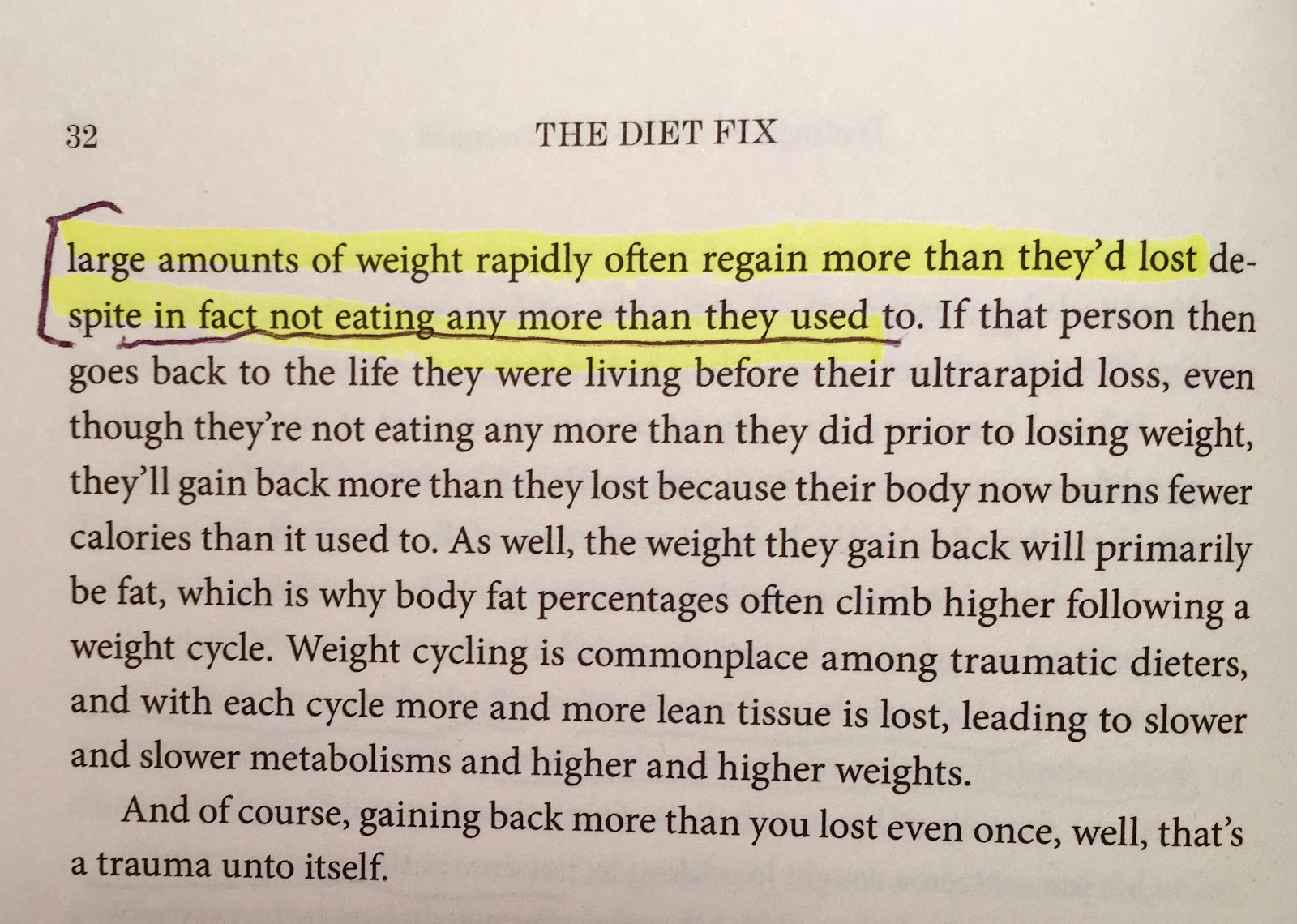
Yo- Yo dieting is bad for you?

IMG_4136.jpg 
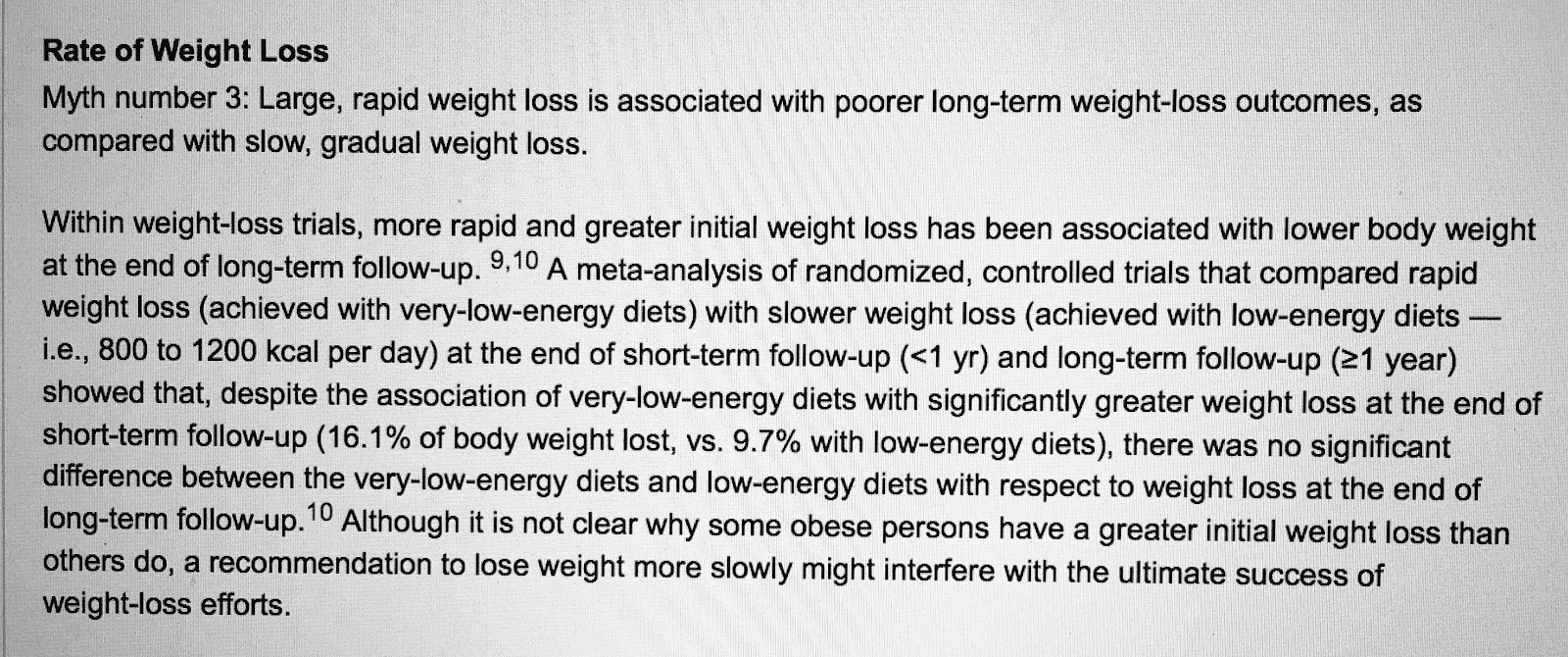
Below is from NEJM, link above
IMG_4137.jpg

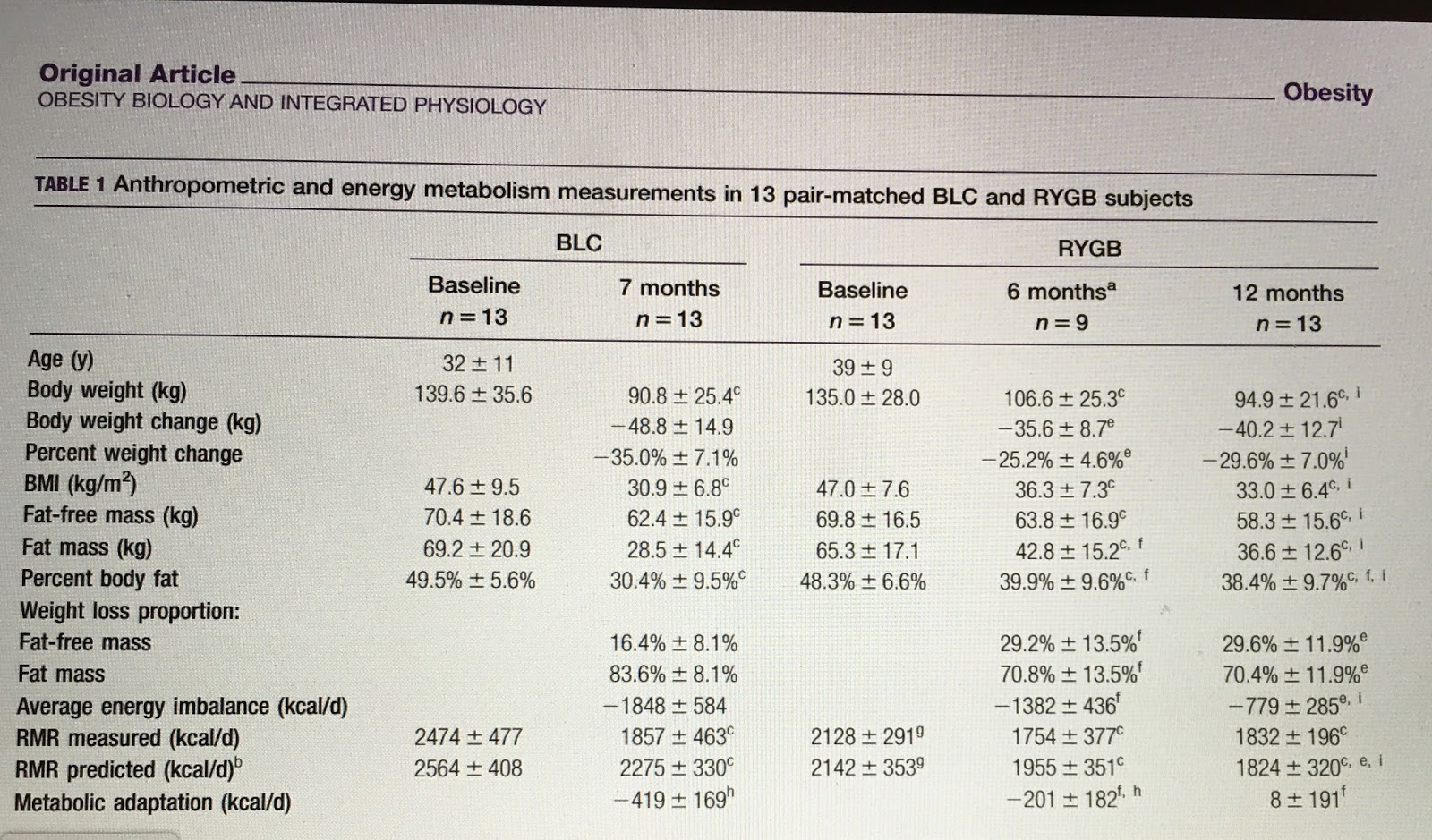
Frank Greenway writes about the new science validated in
The Biggest Loser experiment
excerpt below:

This is where Biggest Loser Experiment was published:


Abstract of Biggest Loser Experiment below


Results:

Participant's:
1-  Body Mass Index:48.7 ± 10.1 kg/m2

2-  Weight 144.9 ± 39.4 kg, and

3---Body Fat 49 ± 6% (mean ± SD)

During the first phase of the competition when the contestants were isolated in a boot camp environment,
the average rate of weight loss was 0.4 ± 0.1 kg/d and
 decreased to 0.19 ± 0.1 kg/d after returning home.

Total weight loss was 58.2 ± 26 kg with 
81.6 ± 8.4% coming from body fat. 

The computer simulations closely matched these data and calculated that average energy intake decreased by 65% during the first phase to 1300 kcal/d while participating in 3.1 h/d of vigorous exercise. 

After returning home, energy intake increased to 1900 kcal/d and vigorous exercise decreased to 1.1 h/d.

Simulation of diet alone resulted in 34 kg of weight loss with 65% coming from body fat,
whereas exercise alone resulted in a loss of 27 kg with 102% from fat.


"The Biggest Loser combined vigorous exercise with dietary restriction causing the participants to lose fat and preserve more lean tissue."

"The reduction in metabolic rate is proportional to the drop in Leptin and Leptin is correlated with the drop in body fat. " 


Monday, June 20, 2016

If you write a Weight Loss Diet Book you must address LOOK AHEAD

Above is from page 54 of Always Hungry by David Ludwig M.D.

To my surprise, Dr. Louis J Aronne did not refer to the LOOK AHEAD trial in his book The Change Your Biology Diet.  Ironically, unlike Dr. Ludwig, he does not rely only on diet on exercise to treat obesity.  He also has medications and surgery in his toolbox.

Here is the data every weight loss diet book should present.
It is the best that a 10 year diet and exercise program could produce.

 However,  I don't know any weight loss diet book that has this graph published in it.   After 10 years of work and suffering a 2.5% improvement over the control is the best that can be achieved?

This shows the waterfall effect of the treated group.  39.3% did maintain >10% weight loss and that is great. 


However, the control group had 17.2% > 10% weight loss after 8 years.
Remember, half of the people in the National Weight Control Registry maintain their weight loss on their own.


This speaker still manages to put a positive spin on  LOOK AHEAD

In April 2015 when the lecture in the video above was given, the 

10 year LOOK AHEAD data 


was available:
Quote from the NEJM paper:
"Weight loss was greater in the intervention group than the control group throughout
(8.6% vs. 0.7% at 1 year;
 6.0% vs. 3.5% at study end)."  (2.5% difference)


The False Hope of Diet, Exercise, Medication and Surgery below:


It's all about adaptive thermogenesis.  The shrunken fat cells don't disappear.  The low Leptin level eventually causes the body to regain weight.  30% of bariatric surgery patients regain all their weight after 10 years.  


Even gastric bypass surgery has a waterfall results, with some patients gaining weight. 

In Sponge syndrome with billions of shrunken fat cells causing weight regain after 6-9 months of weight loss because of Leptin deficiency.

This low level of Leptin cannot be treated with one maneuver.  If you look at this flow sheet you will realize why. 

Many different pathways are involved.  Thus ultimately, the treatment of the reduced obese low level of Leptin will be 


update trials of Alzheimers

 The best part of the day is when I have a bowel movement.   Recently started Miralax. I found MOM too harsh. Pacing helps but I get exhaust...